Filters
9 products



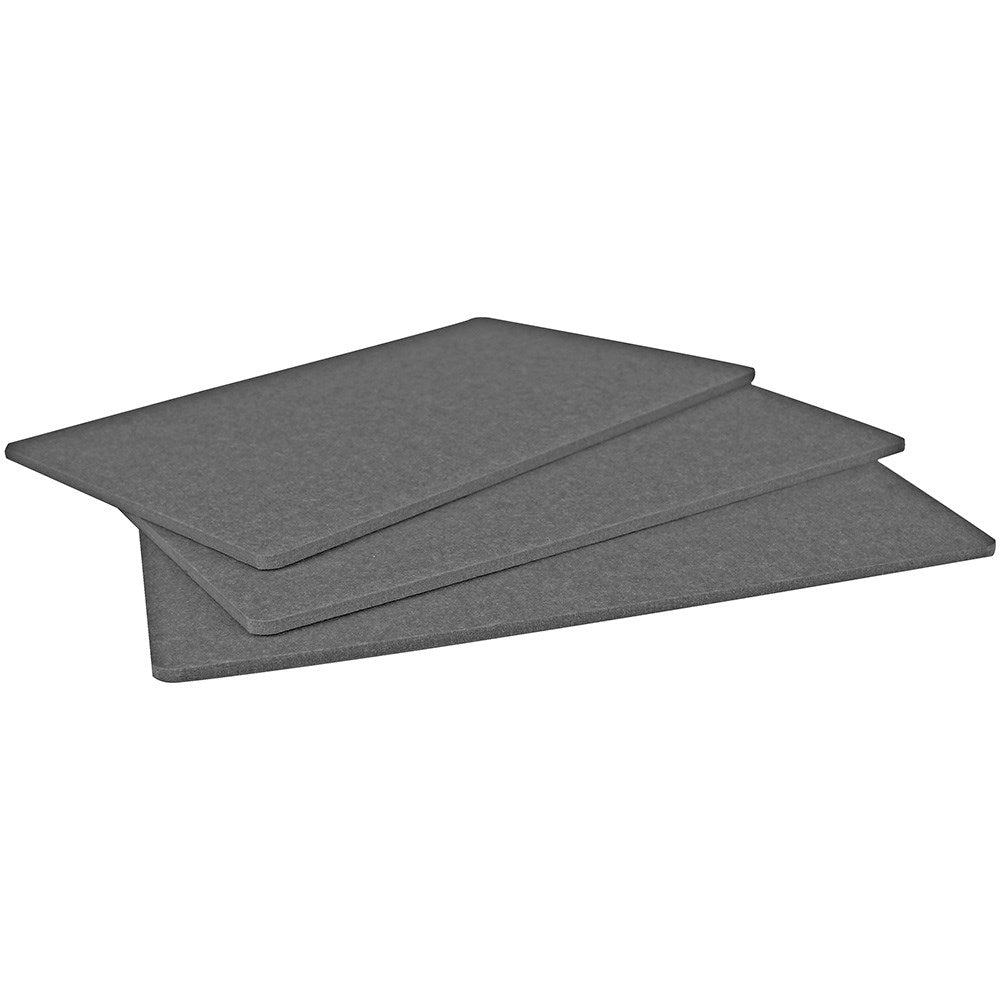


Desk screens are used to create privacy, separation and defined work zones between individual desks or shared workstations. Acoustic desk screens can also help absorb surrounding noise and reduce visual distractions, making them particularly useful in open-plan offices, call centres, coworking spaces and education environments.
A desk privacy screen is typically 300–600 mm high above the desktop, depending on the level of privacy required. Lower screens provide subtle separation while maintaining visibility across the office, whereas taller screens offer greater visual privacy and help reduce distractions between neighbouring workstations.
Yes. Desk screens are particularly well suited to shared desks and bench-style workstations, where they can create individual work zones without the need for permanent walls or partitions. They can improve privacy, reduce distractions and, when acoustic materials are used, help manage noise in busy office environments.
Yes. Many desk screens can be retrofitted to existing office desks using clamps, brackets or desktop-mounted fittings. Compatibility depends on the desktop thickness, desk design and mounting system, so it is important to check the screen's installation requirements before ordering.
NRC stands for Noise Reduction Coefficient and indicates how effectively an acoustic material absorbs sound. NRC values generally range from 0 to 1, with higher numbers indicating greater sound absorption. For example, an NRC of 0.80 means the material absorbs approximately 80% of the sound energy that reaches it under the test conditions.