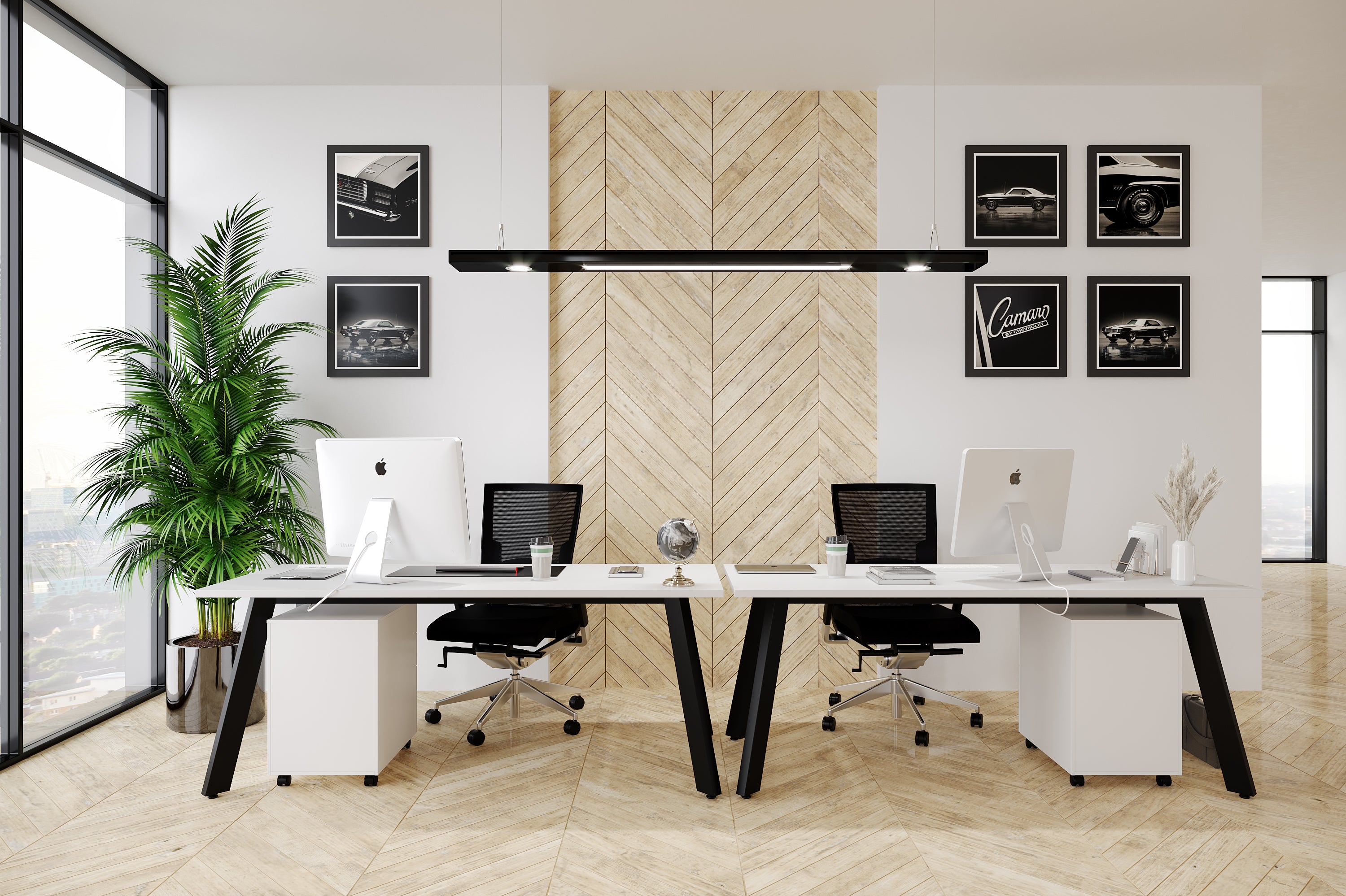
Everything you need to know about desks for Australian Offices
Desks in Australia: The Complete Buyer’s Guide
Choosing the right office desk is about fit, function, and compliance. This guide explains desk types, size planning, and Australian standards (AFRDI, GECA), with checklists and examples, so you can select the right workstation for your team.
Finding the right desk in Australia is not just about finding a flat surface to work on. It is about creating a workspace that supports ergonomics, efficiency, and long-term comfort. A well-selected desk can improve productivity, protect employee health, and enhance the visual identity of your office.
In Australia, most professionals spend an average of 6 to 8 hours per day at a desk. For businesses, desks are not just furniture – they are the foundation of productivity, collaboration, ergonomics, and brand identity. A desk shapes how staff work, how technology is integrated, and even how your workplace is perceived by clients and visitors.
The Australian office furniture market is forecast to keep growing in 2025–26, driven by:
This buyer’s guide covers everything you need to know about choosing the right desk for your workspace. From straight desks and L-shape workstations to executive and reception desks, we’ll explore features, compliance standards, materials, sustainability certifications, and sector-specific recommendations.
Investing in the right desk can boost productivity by up to 12% (as seen in Sydney IT firms) and reduce absenteeism from back pain. Whether for business or home, prioritise compliance with AS/NZS 4442:2018 for adjustability and ISO 9241-5:2024 for posture.
By the end, you’ll know exactly how to select a desk that fits your space, budget, and organisational goals, while ensuring long-term comfort and compliance with Australian workplace standards. If you're still unsure reach out to us and one of our knowledgeable and friendly staff will be happy to assist.
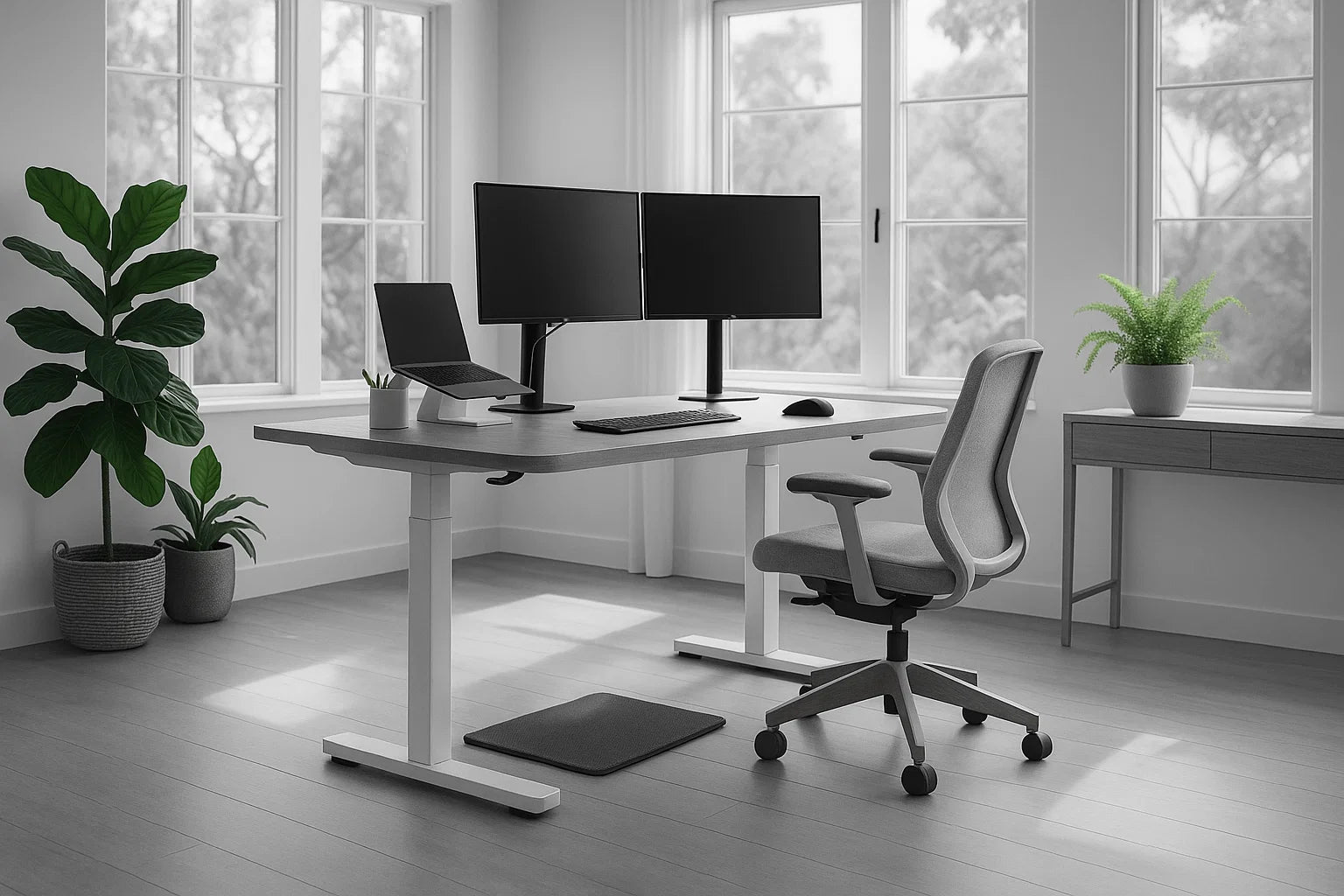
From affordable straight desks to premium executive models, here's a breakdown of popular desk types, including features & benefits.

Desk Converters & Risers
The quick and affordable solution for adding height flexibility, desk risers sit on top of existing desks and can be raised or lowered. Perfect for hybrid workers or small apartments needing ergonomic options without the added expense and environmental factors of replacing furniture.
Benefits:
For Your Physical Health
For Productivity & Energy
Features to Look For:
Common Sizes:

L-Shape / Corner Desks
Maximising corner space and creating dual work zones, L-shape desks are ideal for multitaskers handling paperwork and digital tasks simultaneously. They’re highly efficient for dual-monitor or design setups.
Benefits:
Features to Look For:
Common Sizes:
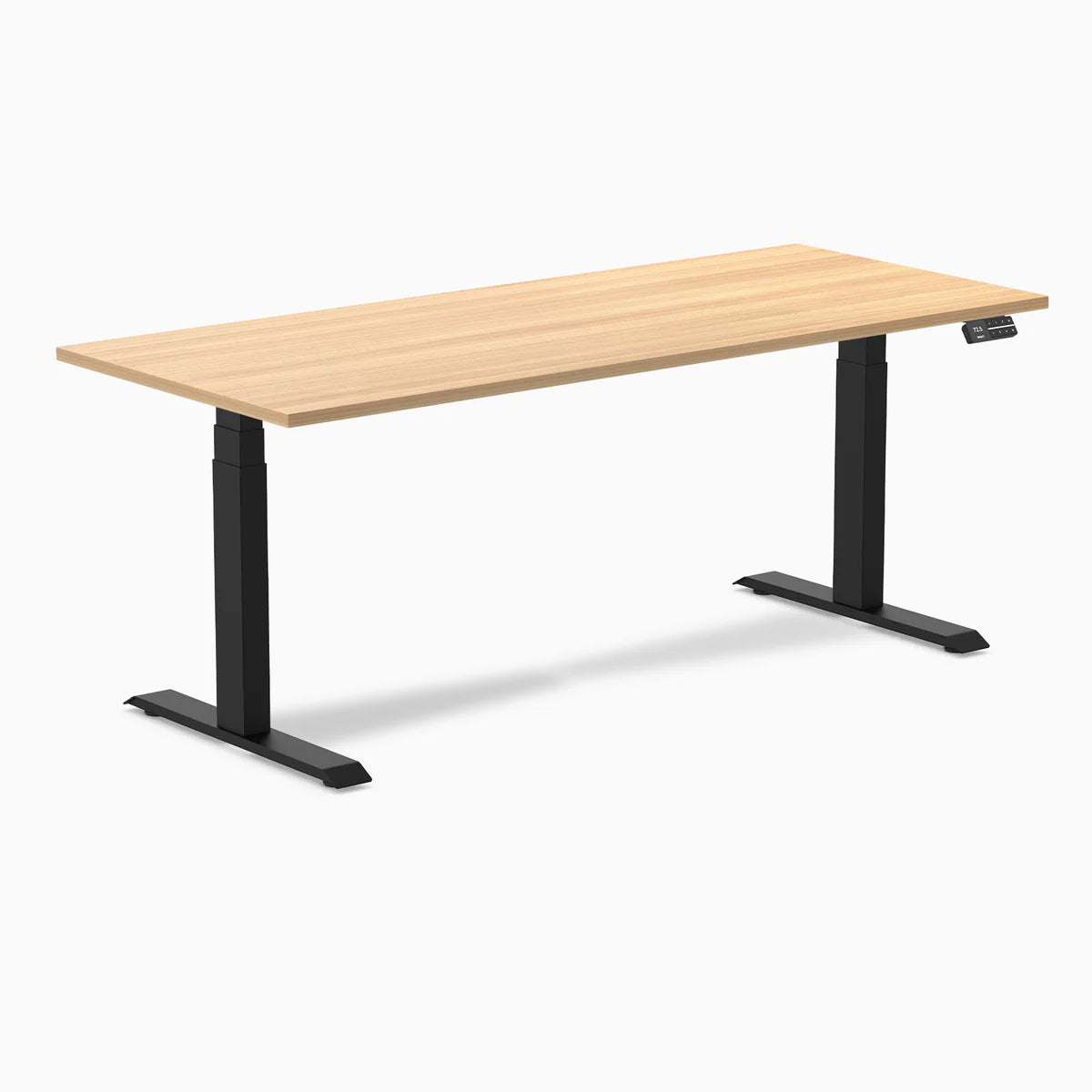
Sit Stand Desks
The star of desk trends, standing desks allow seamless height adjustments for alternating postures, aligning with Safe Work Australia’s anti-prolonged-sitting advice. Standing desks have become the centrepiece of modern workspaces. Instead of sitting for long hours, staff can switch between sitting and standing with a single button press.
Benefits:
Features to Look For:
Common Sizes:
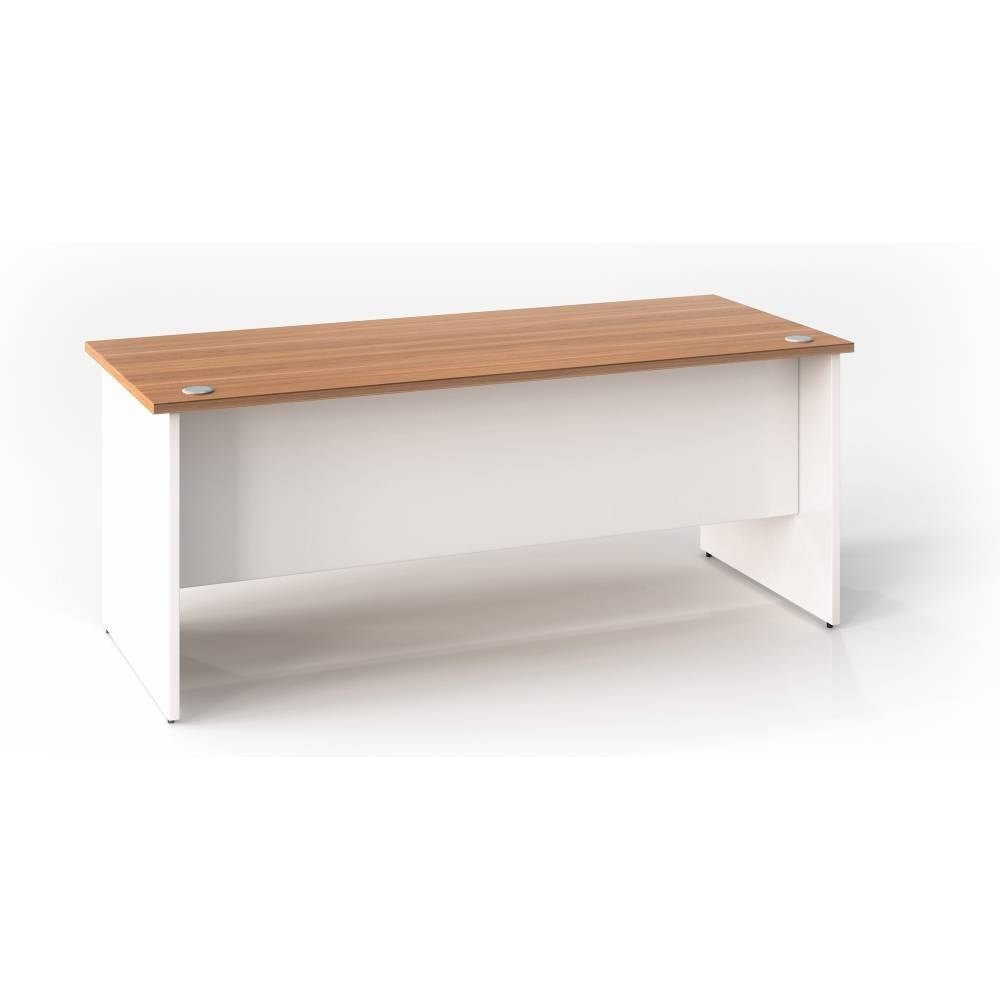
Straight Desks
The backbone of Australian office fitouts, straight desks are versatile, space-efficient, and budget-friendly. They suit everything from corporate offices to classrooms, offering a simple and modular foundation.
Benefits:
Features to Look For:
Common Sizes:

Bow & P-Shape Desks
Designed for managers and consultants, Bow &P-shape desks extend workspace with a curved side that doubles as a small meeting zone. They balance personal work needs with client-facing functionality.
Benefits:
Features to Look For:
Durable edge-banding for high-use settings.
Common Sizes:

Reception Desks
The first impression of any workplace, reception desks
combine visual impact with functional storage. From corporate offices to medical clinics, they signal professionalism and brand identity.
Benefits:
Features to Look For:
Common Sizes:

Executive Desks
A statement piece for directors and senior managers, executive desks pair premium materials with expansive surfaces. They project authority and accommodate meetings and decision-making.
Benefits:
Features to Look For:
Common Sizes:

Folding Desks
Designed for mobility and flexibility, folding desks are the choice for training rooms, classrooms, and multipurpose spaces. They can be reconfigured quickly for dynamic learning and work environments.
Benefits:
Features to Look For:
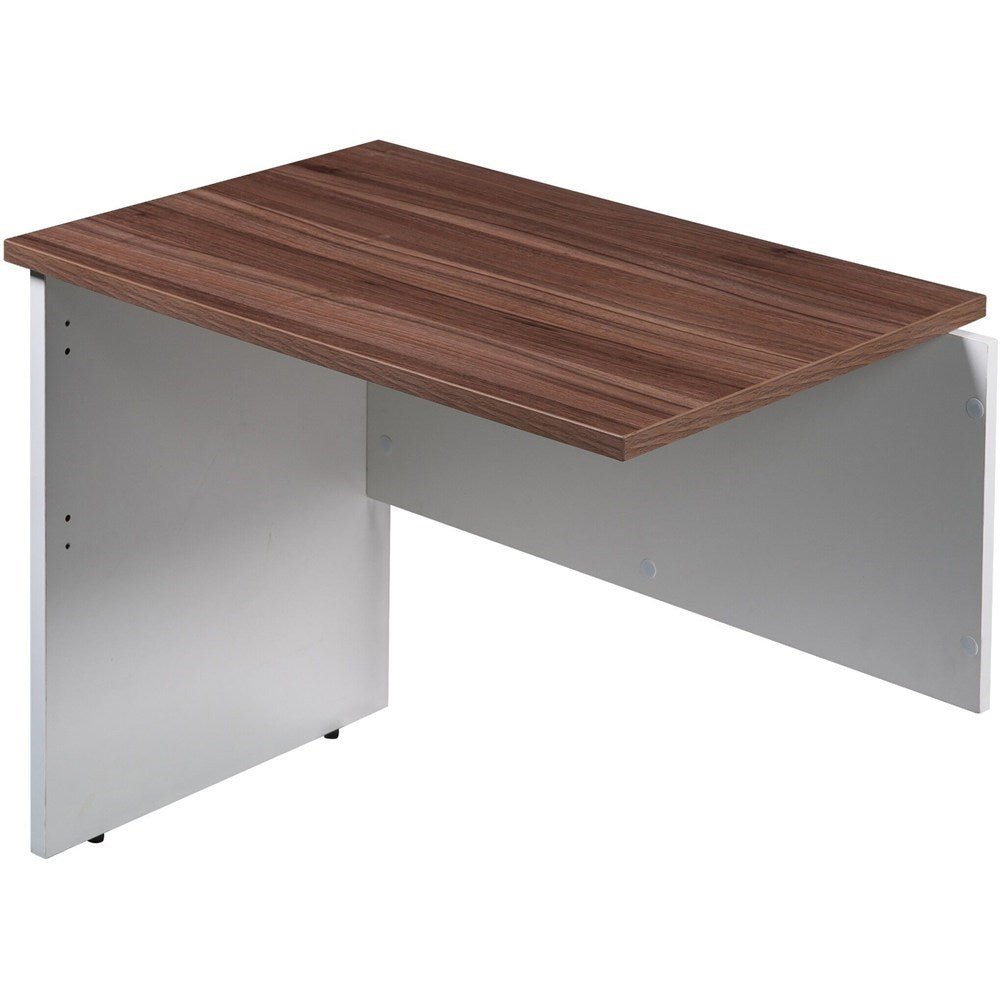
Desk Returns & Tops
If you already have frames, replacing just the desk top is cost-effective and sustainable. A great option for businesses looking to refresh work points.
Benefits:
Perfect for schools and government offices refurbishing on a budget.
Explore our range of Desk Tops
A desk return attaches to the main desk, expanding surface area. Adding a matching desk return converts a straight desk into a corner / L Shape desk without the need for a full replacement.
Ideal for:
Desk Buying Checklist
When it comes to choosing desks, the old saying “measure twice, cut once” has never been more relevant. That’s why our team provides free on-site measurement and 3D rendering services with every office fitout. From Melbourne to Brisbane, we help you visualise layouts, maximise space, and ensure compliance before a single desk is delivered.
☑ Measure your space (6 m² per workstation).
☑ Choose the right desk type (straight, sit-stand, executive).
☑ Check adjustability and ergonomics.
☑ Select materials (laminate, veneer, steel).
☑ Look for certifications (AFRDI, GECA, FSC).
☑ Plan cable management.
☑ Match sector needs (corporate, education, healthcare).
☑ Consider tax write-off benefits.
Sector-Specific Desk Solutions
Corporate Offices
Government Departments
Education
Healthcare
Home Offices
Ergonomics and Australian Standards
Standards & Guidance:
AS/NZS 4442:2018 sets out requirements for office desks, including height ranges and durability.
Safe Work Australia highlights that posture should be varied regularly, with sitting and standing alternated throughout the day (Safe Work Australia – Good Work Design).
WorkSafe WA recommends avoiding more than 20–30 minutes in a single posture, reinforcing the importance of adjustable desks (WorkSafe WA – Office Ergonomics).
Comcare provides practical workstation setup guidance, including monitor positioning, desk height, and sit-stand variation (Comcare Workstation Setup Guide PDF).
Tips for Ergonomic Desks:
Sector-Specific Desk Solutions
Corporate Offices
Government Departments
Education
Healthcare
Home Offices
Space Planning and Layout
Proper space planning ensures staff can move comfortably and work effectively.
Guidelines:
Pods of straight desks for open-plan offices.
L-shape desks for managers.
Sit-stand hot desks for shared spaces.
We can help you with your layout. Take advantage of our complementary 3D rendering and office deign layout service.
City-Specific Desk Trends
Desks Melbourne
Desks Sydney
Desks Brisbane
Desks Perth
Desks Adelaide
Sustainability and Certifications
Procurement policies in Australia increasingly demand sustainable options.
AFRDI Green Tick: ensures durability and sustainability.
GECA (Good Environmental Choice Australia): trusted ecolabel, recognised by Green Building Council.
FSC Certification: ensures timber is from responsibly managed forests.
Case Study: A Victorian government office required all desks to be GECA certified as part of their tender. Suppliers without certification were excluded. We supplied a range of certified desks accompanied by Buro Greengaurd certified Chairs.
Materials and Finishes
Laminate/Melamine (E0/E1): durable, affordable, wide colour range.
Timber Veneer: executive appeal, warm finish.
Powder-coated Steel Frames: industrial strength, long life.
Glass: sleek, modern, creative spaces.
Trend: Neutral greys and whites remain popular, but timber-look finishes are trending in Australian offices.
Tax Benefits: Small Business Instant Asset Write-Off
For 2025–26, the ATO’s instant asset write-off scheme allows small businesses to claim immediate deductions on office furniture purchases, including essentials like office desks & ergonomic chairs.
Why It Matters:

Find quick answers to common desk buying questions, from ergonomics and standards to tax write-offs and space planning.
Yes — but only if used correctly. Safe Work Australia advises workers should alternate between sitting and standing, as prolonged use of either posture can cause fatigue or musculoskeletal issues. Sit-stand desks encourage healthy posture variation, reduce back pain, and are proven to improve energy and productivity. To make the most of this setup, many workplaces now pair their sit-stand desks with ergonomic desk stools. These stools allow users to perch in a semi-standing position, reducing fatigue while still promoting movement and circulation. Together, a sit-stand desk and a height-adjustable stool create a dynamic workstation that supports long-term comfort and healthier posture.
Most fixed desks in Australia are set at around 720 mm high. However, the Australian Standard AS/NZS 4442:2018 recommends a seated adjustment range of 620–845 mm for ergonomic compliance. This allows workers of different heights to maintain neutral posture while working.
WorkSafe Victoria recommends allocating around 6 m² per workstation. This includes tertiary space for the desk, chair, storage, and circulation zones. You should also allow at least 1.2 m clearance in front of drawers or filing units to ensure safe and comfortable access.
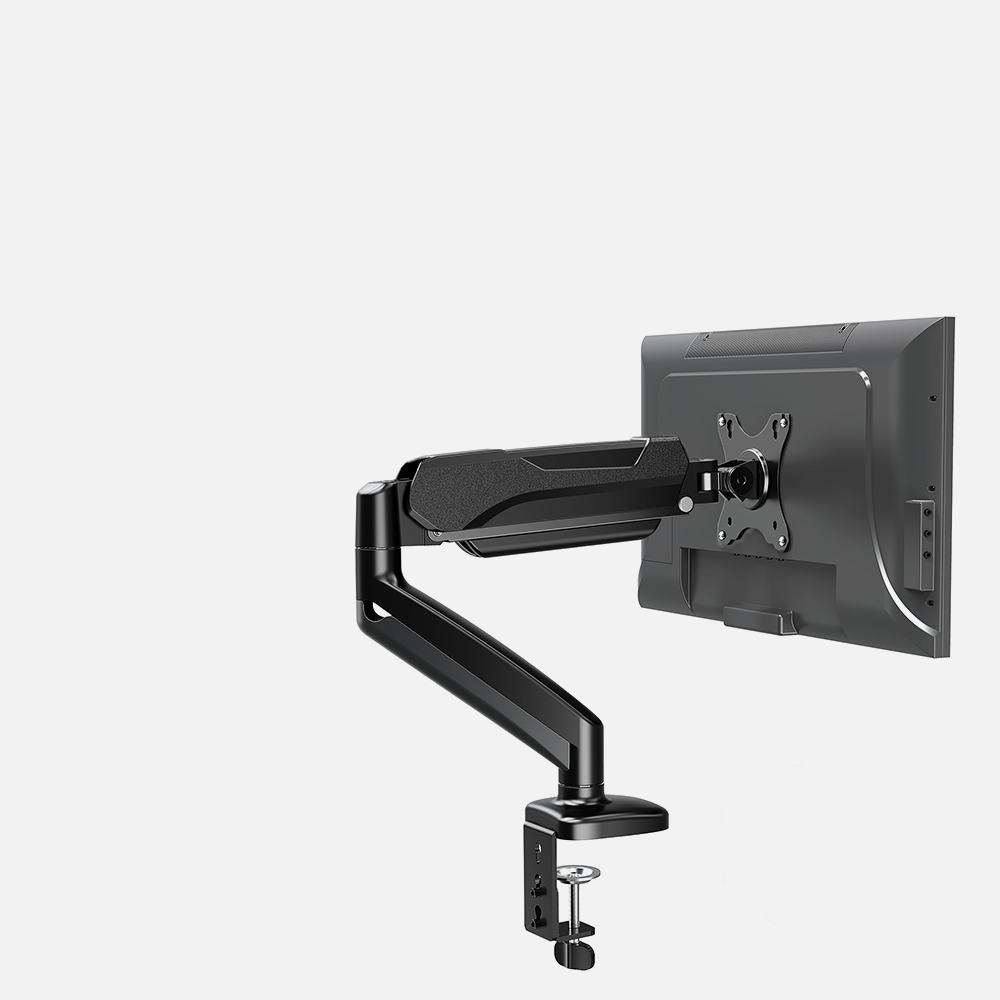
Compact straight desks or L-shape corner desks are ideal for maximising space in small offices or home setups. Adding a desk return or a monitor arm can create more usable space without increasing your desk footprint.
Yes. Under the ATO’s Instant Asset Write-Off scheme (2025–26), small businesses can immediately deduct the full cost of office desks, fitout furniture, and ergonomic upgrades. This makes investing in new workstations both a productivity and tax-smart decision.
When purchasing desks for government, education, or corporate fitouts, look for sustainability and compliance certifications such as:
These align with government procurement frameworks and Green Star-rated building requirements.
Choosing the right desks isn’t just about style or price — it’s about making sure every workstation fits your space, supports workflow, and complies with Australian standards. That’s why we back every office fitout with our complimentary on-site measurement and 3D rendering service.
What you get:
✅ On-site measurements — our team visits your office to double-check dimensions and layout.
✅ 3D renderings — visualise your desks in place before you buy, avoiding costly surprises.
✅ Compliance peace of mind — layouts planned to align with Safe Work Australia and AS/NZS standards.
✅ Optimised space planning — from reception to corner offices, we design for flow, collaboration, and comfort.
It’s our way of putting the old saying into action: “Measure twice, cut once.” With Office Furniture Designs, your desks are guaranteed to fit, function, and future-proof your workspace.